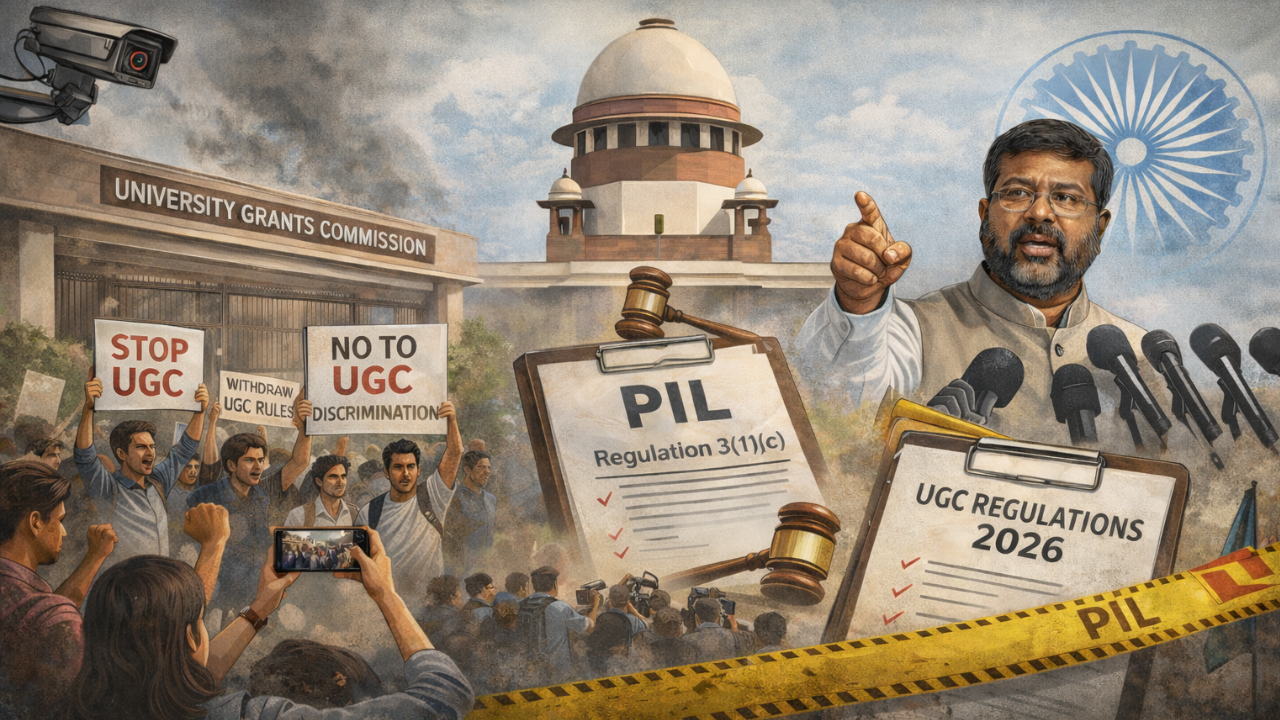

This article explores the origins and complexities behind the UGC regulations, highlighting the lack of government oversight in their formulation, the influence of historical narratives, and the broader implications for Indian higher education governance.
Context and Background
The discussion around the UGC (University Grants Commission) regulations reveals deep-seated frustrations and concerns within the Indian educational community. The regulations, perceived by many as a significant misstep, have sparked widespread debate about their origins, formulation process, and impact. This controversy is not new; it stems from a broader pattern of government decision-making that often appears disconnected from the ground realities of education and governance.
A key point of contention is the transparency and accountability in how these regulations were created. Critics argue that the government and the bodies involved did not thoroughly scrutinize or understand the implications of these policies before implementation. This has led to a sense of mistrust and suspicion about the motives and the process behind these decisions.
The Problem and the Question
Central to the issue is the question: Who were the architects of these regulations, and what was their understanding of the educational landscape? The lack of clarity about the origin and intent of these policies fuels the perception that they may have been crafted without adequate consultation or comprehension of the sector’s needs.
Further complicating matters is the role of historical narratives and their influence on policy decisions. There is a tendency to base current policies on a particular interpretation of history—often one that is simplified or biased—leading to regulations that may not align with the realities of contemporary education.
Core Argument and Critique
The core argument suggests that the UGC regulations, and similar policies, are often the result of a disconnect between policymakers and the actual stakeholders—educators, students, and institutional leaders. This disconnect is compounded by a lack of government oversight or proper engagement with the sector.
The critique extends to the historical influences that shape these policies. For example, the way colonial-era narratives have been embedded into Indian educational thought continues to influence current regulations. These narratives often portray Indian society as inferior or in need of external guidance, which in turn justifies top-down regulation and control.
A historical example discussed is the work of James Mill, a colonial historian who wrote extensively about India without ever having visited the country. His portrayal of Indian society was based on stereotypes and biased perspectives, which later influenced educational and administrative policies. Such narratives have historically contributed to a view of India as a society needing external intervention rather than self-governance.
Supporting Evidence and Examples
The transcript references the influence of colonial historians like James Mill, who wrote about Indian history from a detached and often biased perspective. His works, which were produced without direct engagement with Indian society, helped shape perceptions that justified colonial rule and control over Indian institutions.
Another example is the British class structure, which was deeply hierarchical, with power concentrated in a small elite—such as monarchs, aristocrats, and clergy—who dictated societal norms and governance. These historical structures and narratives have left a lasting imprint on Indian governance models, including education policies.
The speaker also mentions the role of certain influential individuals who, despite their high positions and credentials, may have contributed to policy decisions without fully understanding or representing the diverse realities of Indian society. This pattern of disconnected policymaking and the perpetuation of colonial narratives continues to influence current educational regulations.
Implications and Consequences
The implications of these historical and systemic issues are significant. Policies like the UGC regulations risk being disconnected from the actual needs of Indian educational institutions, leading to inefficiencies, resistance, and a lack of trust among stakeholders.
Moreover, the reliance on colonial narratives and hierarchies can perpetuate a top-down approach that undermines the autonomy of Indian universities and educators. This can hinder innovation, restrict academic freedom, and reinforce a colonial mindset that views external guidance as superior.
The broader consequence is a cycle wherein policies are crafted based on outdated or biased perceptions, which then require constant revisions and resistance, rather than fostering a truly autonomous and self-reliant higher education sector.
Conclusion and Open Questions
Understanding the backstory of the UGC regulations reveals the importance of critically examining the historical narratives and systemic structures that influence policymaking. Moving forward, there is a need for greater transparency, inclusive dialogue, and acknowledgment of India’s complex history in shaping policies.
Questions remain about how to break free from colonial legacies and develop governance models that truly reflect India’s diverse society and aspirations. Addressing these deep-rooted issues requires a conscious effort to reframe historical narratives and empower stakeholders at all levels of the educational system.
Reflecting on the Roots of Policy and the Path Ahead
The controversy surrounding the UGC regulations underscores the importance of understanding their historical and systemic roots. Policies crafted without genuine engagement with the ground realities and influenced by colonial-era narratives risk perpetuating a cycle of inefficiency and distrust. To build a resilient and autonomous higher education system, India must critically evaluate its historical influences and foster policies rooted in inclusivity, transparency, and self-awareness.