Context and Rationale for Naval Mobility
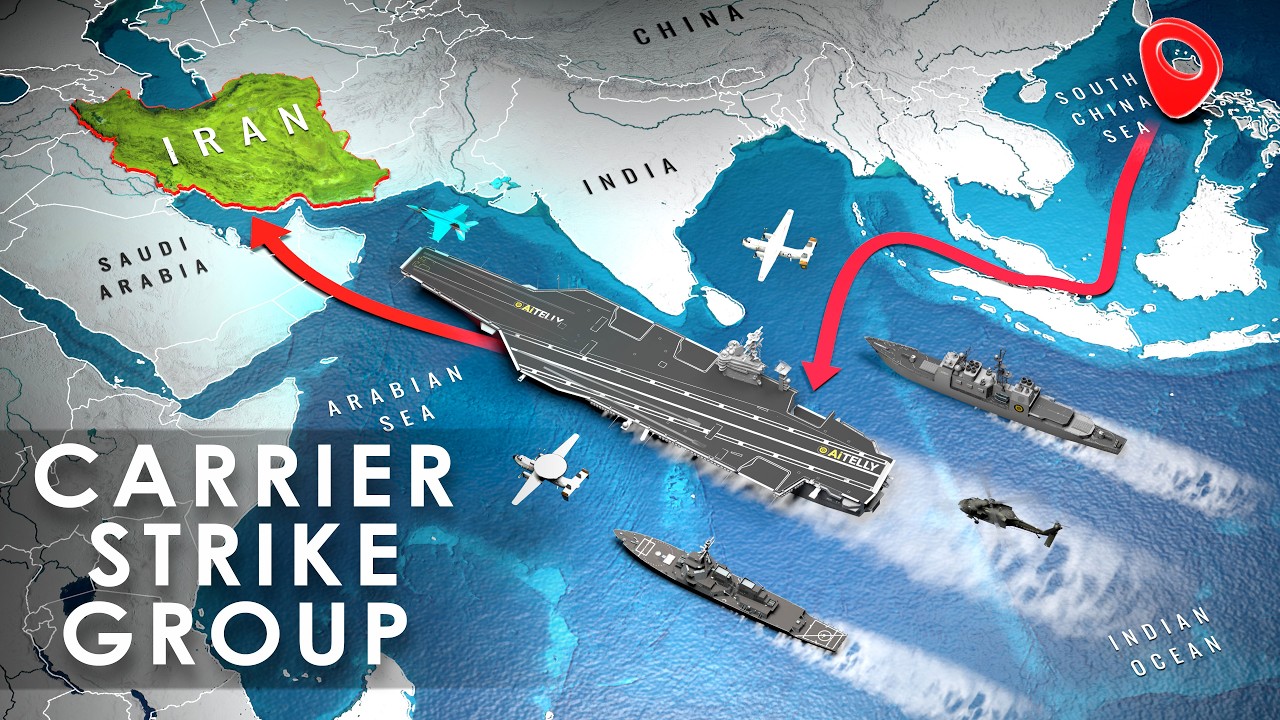
The United States maintains a significant naval presence in various regions, notably around the South China Sea and the Persian Gulf. Recently, the Pentagon has been rapidly repositioning its naval assets, including moving a nuclear-powered aircraft carrier from the South China Sea to the Persian Gulf. This operation is notably costly, with expenses exceeding $6.5 million daily, highlighting the logistical and financial burden of such movements.
Despite advancements in stealth technology and precision strike capabilities, the U.S. continues to rely heavily on large naval assets like aircraft carriers. These vessels serve strategic roles beyond mere attack power; they establish a persistent military presence that can deter adversaries and enforce no-fly zones, which are difficult to sustain with bombers alone. The deployment of carrier strike groups involves complex logistical planning, emphasizing the importance of these platforms in U.S. military strategy.
The Composition and Deployment of U.S. Naval Forces
The U.S. Navy's current fleet comprises 11 nuclear-powered aircraft carriers, divided into two main classes: the older Nimitz class and the newer Ford class. The Nimitz class, with ten ships built between 1975 and 2009, forms the backbone of the fleet, while the Ford class includes the USS Gerald R. Ford, featuring advanced electromagnetic catapults for faster jet launches.
In a hypothetical scenario, if the Department of Defense issues a high-priority order, the USS Abraham Lincoln, typically stationed in the South China Sea, could reach the Middle East within a week, traversing critical choke points like the Malacca Strait. Simultaneously, other carriers such as the USS George H. W. Bush could transit from Norfolk to the Mediterranean, allowing the U.S. to establish multiple carrier strike groups in strategic locations within ten days. This rapid redeployment ensures a formidable presence around Iran and the broader Middle East.
Logistics of Missile Support and Ammunition Transfer
Following initial strikes on Iran's nuclear facilities, U.S. military logistics involved removing a significant portion of missile defense systems from the Middle East, specifically 60% of Patriot missile systems from Qatar. To replenish and enhance missile defenses, the U.S. relies on a large-scale aerial logistics operation, involving hundreds of heavy transport flights carrying Patriot batteries and components for other missile systems.
A critical aspect of this replenishment strategy involves utilizing aging missile stockpiles from Europe and Asia, including Patriot missiles from Germany and Japan. These older systems serve as cost-effective solutions against threats like Iran's Shahid drones and hypersonic missile technology, allowing the U.S. to conserve its modern interceptors for more advanced threats.
Financial and Material Costs of Naval Mobilization
The operational costs of deploying a carrier strike group are substantial. Maintaining a single strike group can cost between $6.5 million and $9 million per day, covering expenses from ship maintenance and fuel to the wages of thousands of sailors. The cost of missile interceptors is also high, with a single SM-3 missile costing approximately $28 million, and other interceptors like the FAD costing over $12 million each.
Overall, a 30-day deterrence operation involving multiple strike groups and extensive logistics can easily exceed $1.5 billion, illustrating the immense financial commitment required for such military posturing before any actual combat occurs.
Challenges of Logistics and Access
Sustaining a naval presence in a conflict zone depends heavily on access to friendly ports. Recent reports indicate partial evacuations of key bases such as Al Udeid in Qatar due to rising tensions, raising concerns about the U.S. Navy’s ability to maintain resupply chains. Without access to ports for refueling and resupply, the fleet would need to rely on a long chain of supply ships, stretching thousands of miles back to bases like Diego Garcia and Guam.
If this supply chain is compromised, the effectiveness of the fleet diminishes drastically, turning what is arguably the most powerful naval force in history into a floating museum. This logistical vulnerability underscores the importance of secure access and the risks of regional hostilities.
Air Power as a Strategic Alternative
While naval power is central to U.S. military strategy, it is not the sole option. The U.S. Air Force possesses a formidable air power capability that can operate independently of naval assets. Strategic bombers such as the B-2 Spirit, B-1B Lancer, and B-52 Stratofortress can be deployed globally within 24 hours, providing persistent and precise strike options.
The B-2 Spirit is capable of penetrating the most advanced air defenses to strike deep underground targets, such as Iran’s nuclear facilities. The B-1B Lancer can deliver large payloads of cruise missiles and guided bombs at high speed, while the B-52 remains a versatile platform for launching long-range cruise missiles from outside enemy reach.
Integrated Attack Strategies
A typical attack sequence might begin with stealth bombers like the B-2 targeting high-value air defense systems such as the S-400 Triumph, aiming to disable enemy radar and missile networks. Following this, low-altitude flights by B-1B Lancers can destroy remaining anti-aircraft systems, paving the way for conventional bombers like the B-52 to execute precision strikes on critical infrastructure.
This layered approach leverages the strengths of both stealth and conventional aircraft, maximizing effectiveness while minimizing exposure to enemy defenses. The limited number of B-2 bombers underscores the importance of strategic planning in their deployment.
The Composition and Capabilities of Carrier Strike Groups
A typical U.S. carrier strike group includes the aircraft carrier itself, four to seven ships, and support vessels. The carrier can host around 130 fighter jets, providing significant airpower. Flanking the carrier are destroyers, primarily of the Arleigh Burke class, designed for anti-air and anti-missile operations, and cruisers like the Ticonderoga class, which offer multi-mission capabilities including surface warfare, air defense, and undersea warfare.
This formation creates a formidable, multi-layered defense and attack system, capable of projecting power across vast distances. The strategic value of such groups lies not only in their offensive potential but also in their ability to defend themselves and sustain prolonged operations at sea.
Balancing Naval Power and Air Power in Modern Warfare
The U.S. military’s reliance on aircraft carriers and carrier strike groups remains a cornerstone of its power projection, especially in volatile regions like the Middle East. However, the high costs, logistical complexities, and regional access challenges highlight vulnerabilities that could undermine their effectiveness.
Complementing naval assets with advanced air power provides strategic flexibility, allowing the U.S. to maintain a credible threat even if naval logistics are compromised. Ultimately, the combination of sea-based and air-based capabilities offers a layered approach to deterrence and potential conflict, emphasizing the importance of both in contemporary military strategy.