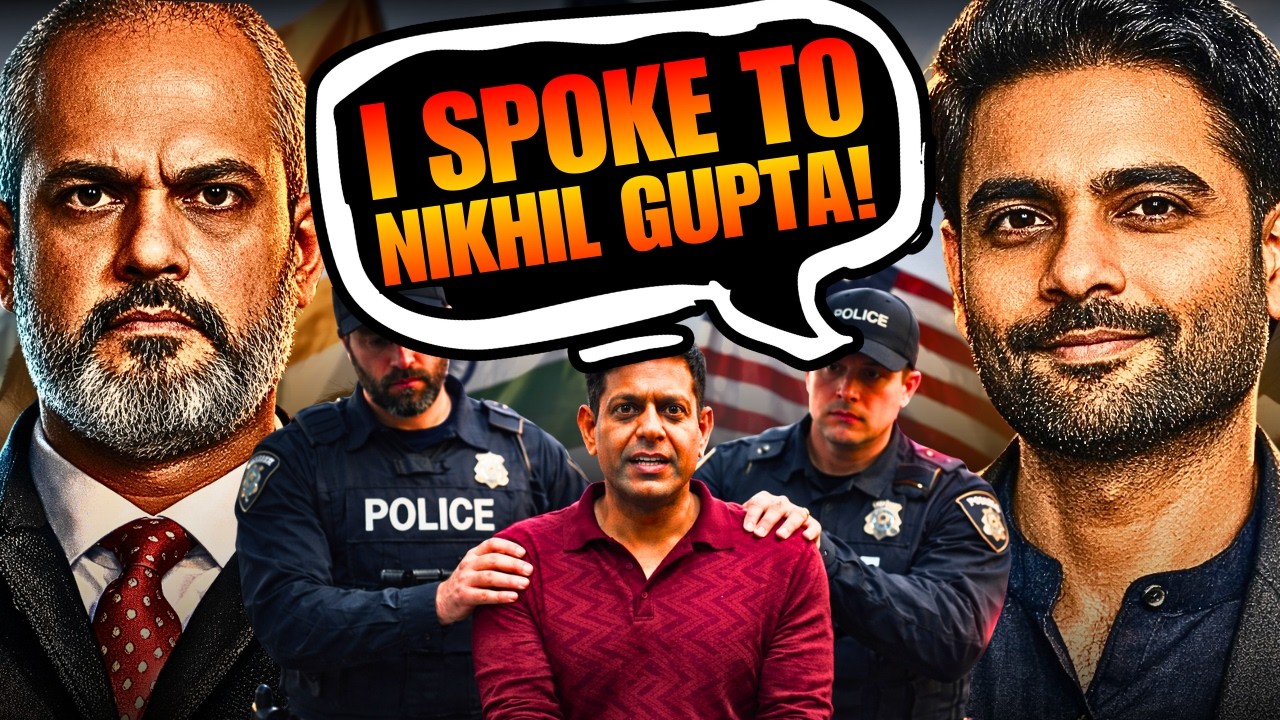



Recent developments concerning Nikhil Gupta’s legal situation have garnered significant attention, especially in the context of US-India relations. Abhinandan Mishra, a journalist closely connected to the case, provides an in-depth analysis of the evolving narrative surrounding Gupta, his legal proceedings in the United States, and the broader geopolitical implications. Mishra highlights that his interactions with Gupta and his family span over a year and a half, during which trust was built, and various aspects of Gupta’s case were understood firsthand.
The Initial Position and Changing Narratives
Initially, Nikhil Gupta was represented by legal defenses asserting his innocence, with claims that he was a victim of mistaken identity. During court proceedings in New York, Gupta accepted guilt, revealing financial transactions and details that contradicted earlier claims of innocence. This shift suggests a possible plea deal or an understanding with prosecutors, where Gupta might receive a reduced sentence in exchange for cooperation or a confession.
Abhinandan Mishra interprets this change as indicative of a plea deal—a common practice in the US legal system where defendants accept guilt in exchange for a lighter sentence. Gupta’s family, understanding the severity of the case, anticipates a sentence of around 10-12 years instead of the original 40-year sentence, with the possibility of early repatriation after serving part of the sentence.
Implications of the Plea Deal and US-India Relations
The potential plea deal raises questions about the motivations and pressures involved. Mishra suggests that Gupta’s acceptance of guilt could be a strategic move facilitated by the US legal and penal system, which often encourages defendants to accept guilt for leniency. This approach might be influenced by the desire to reduce the sentence significantly, possibly to facilitate early repatriation to India.
Furthermore, Mishra points out that Gupta’s case might be part of a broader pattern where the US judicial system offers 'plea deals' to foreign nationals, especially in high-profile cases. The family’s expectation of early release aligns with this, implying a calculated strategy to minimize the sentence and manage the fallout.
The Role of US and Indian Governments
Mishra discusses the interactions between US and Indian officials, revealing that senior Indian officers had discussions with US agencies about Gupta’s case, including assurances that Gupta was supported by Indian authorities. However, he notes that the US government’s stance appears to be more about managing the case quietly rather than openly intervening.
There is an undercurrent of suspicion that certain officials may have been involved in covert negotiations or at least aware of the plea deal strategy. Mishra emphasizes that Gupta’s case involves multiple layers of diplomatic and legal maneuvering, with potential implications for how India and the US handle such high-profile cases involving their citizens.
Potential Media and Political Ramifications
The case’s exposure could have significant media and political consequences. Mishra warns that if details of Gupta’s cooperation or plea deal surface publicly, it could lead to embarrassment for both countries. Particularly, there is concern that other sensitive cases, such as those involving alleged terrorists or political figures, might come to light through leaks or media investigations.
He suggests that the case might be a strategic move to contain or control information, rather than a straightforward legal process. Mishra highlights that the media’s role in revealing or concealing details will be crucial in shaping public perception and diplomatic relations.
Future Outlook and Open Questions
Mishra concludes that, while the current information points toward a plea deal and early repatriation, many aspects remain uncertain. The actual details of Gupta’s cooperation, the role of various government agencies, and the timing of his return are still unclear. He emphasizes the importance of monitoring future developments, as these could influence broader diplomatic strategies.
He advocates for a cautious approach, recognizing that behind the legal proceedings lie complex geopolitical calculations. The case exemplifies how individual legal stories can reflect and impact international relations, especially when high-profile figures and sensitive national interests are involved.
Conclusion and Reflection
Nikhil Gupta’s case underscores the intricate interplay between legal processes, diplomatic negotiations, and media narratives. Abhinandan Mishra’s analysis suggests that what appears as a straightforward legal matter may, in reality, be part of a larger strategic effort by both US and Indian authorities to manage sensitive issues quietly. As the story continues to unfold, it will reveal more about the underlying motives, diplomatic pressures, and the potential for future cooperation or conflict between the two nations.