

Context and Strategic Environment
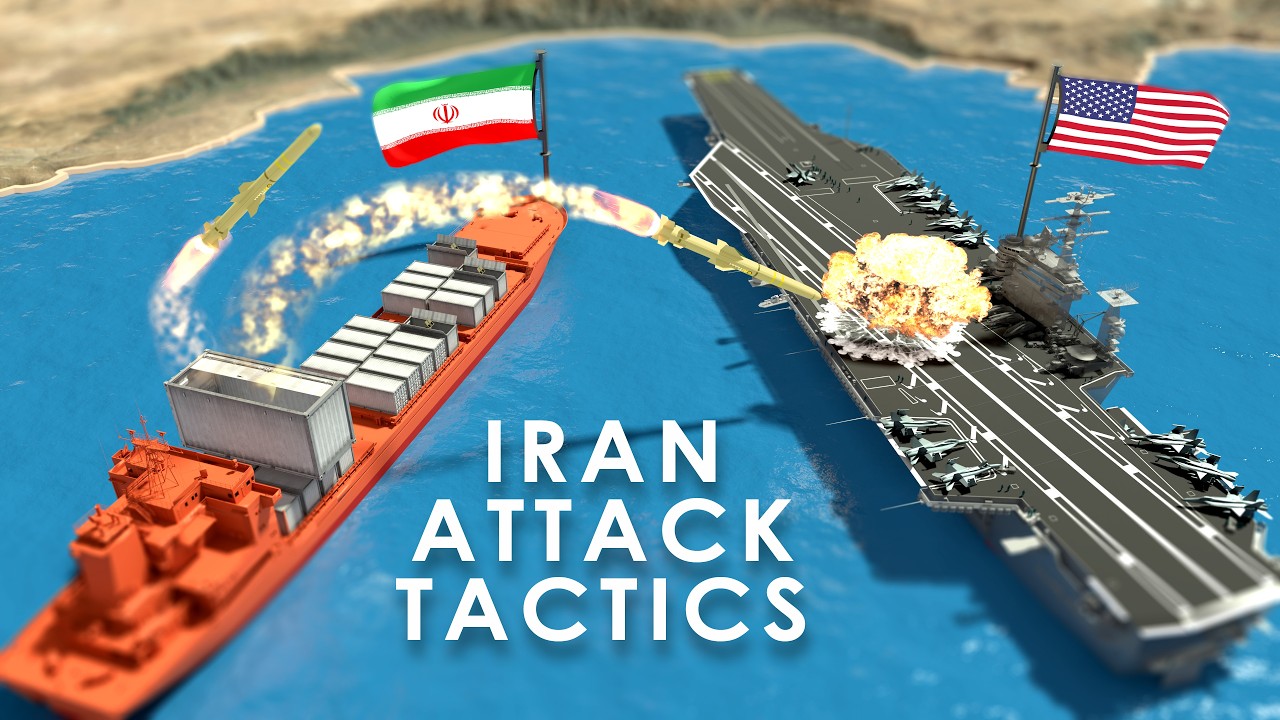
The Persian Gulf region presents a significant strategic challenge for the U.S. Navy, which maintains its dominance through advanced aircraft carriers, destroyers, and extensive logistical support. However, Iran, as a smaller regional power, cannot confront the U.S. Navy directly with equivalent military strength. Instead, Iran employs a series of asymmetric tactics designed to offset its relative military disadvantages and complicate U.S. operational freedom in the region.
Iran’s Asymmetric Warfare Tactics
Iran’s approach involves a combination of unconventional, low-cost, yet effective tactics that aim to threaten and harass U.S. naval assets without engaging in traditional naval battles. These tactics include deploying swarms of small boats, mining strategic waterways, utilizing mobile land-based missile batteries, deploying stealthy submarines, and leveraging drone and aerial capabilities. Each tactic is designed to exploit specific vulnerabilities of the U.S. fleet and regional infrastructure.
Swarm Attacks with Small Boats
One of Iran’s most prominent tactics involves using hundreds of small, fast attack craft operated by the Islamic Revolutionary Guard Corps Navy. These boats are armed with heavy machine guns, rockets, and anti-ship missiles. Instead of engaging U.S. destroyers in direct combat, Iran deploys these small boats simultaneously from multiple directions to overwhelm the ship’s defensive systems. The objective is to present more targets than the ship can track and neutralize at once, potentially damaging rather than sinking ships, thereby increasing operational risk for the U.S. fleet.
Mining Strategic Waterways
Another key strategy involves mining the Strait of Hormuz, the world’s most critical oil choke point. Iran maintains an inventory of thousands of naval mines, including sophisticated smart mines capable of listening for specific acoustic signatures. These mines can be deployed covertly by submarines, small boats, or even disguised civilian vessels. The primary goal is economic disruption—blocking shipping lanes to cause delays, spike global oil prices, and impose economic pain on the U.S. and its allies.
Land-Based Missile Threats
Iran’s rugged coastline offers an ideal environment for mobile missile launchers, including truck-mounted units employing shoot-and-scoot tactics. These mobile missile batteries can fire ballistic or anti-ship missiles from concealed locations along the coast, then rapidly relocate to avoid counterattack. This creates a constantly shifting threat zone, turning the Gulf into a 'kill zone' where U.S. ships are under persistent threat from land-based missile strikes.
Submarine Ambush Tactics
Iran’s shallow and constrained waters make it difficult for large nuclear submarines to operate effectively. Instead, Iran employs diesel-electric mini submarines, such as the GD class, which are small, stealthy, and capable of lying silent on the seafloor. These submarines can wait near strategic choke points, such as the Strait of Hormuz, for passing high-value targets like aircraft carriers or destroyers. They can launch surprise torpedo attacks designed to disable or severely damage these ships while remaining nearly undetectable by sonar.
Aerial and Drone Warfare
Iran has invested heavily in drone technology, transforming itself into a drone superpower within the Middle East. Its UAVs serve multiple roles, including surveillance and as loitering munitions—suicide drones that crash into targets. During hostilities, Iran could launch massive waves of drones to target radar installations, flight decks, and other critical assets of U.S. ships, aiming to blind the fleet’s sensors and halt flight operations. This would leave the fleet vulnerable to missile attacks and other asymmetric threats.
Missile and Land-Based Attack Strategies
Iran’s extensive ballistic missile arsenal allows it to target U.S. naval bases and logistical hubs across the Gulf region. These missile barrages aim to destroy critical infrastructure, including ports and command centers, thereby denying the U.S. Navy access and logistical support. Key targets include bases like Al Udeid in Qatar, Bahrain’s Naval Support Activity, and U.S. bases in Iraq and the United Arab Emirates. By combining missile strikes, drone attacks, and proxy forces, Iran seeks to overwhelm American defenses, deter intervention, and project regional influence.
Potential Targets and Strategic Objectives
A primary target in any conflict would likely be Al Udeid Air Base in Qatar, hosting thousands of U.S. troops and serving as a regional command hub. Iran could use ballistic missiles such as the Fateh-110, capable of reaching up to 300 km, or the Qadr missile, with ranges up to 800 km, to target this installation. The use of proximity fuses and high-explosive warheads could maximize damage, destroying unarmored structures, fuel tanks, and command posts, thereby crippling U.S. operational capacity in the Gulf.
Implications of Iran’s Tactics
Iran’s asymmetric tactics are designed to impose strategic costs on the U.S. Navy without engaging in direct confrontation. By threatening key shipping lanes, military bases, and high-value assets, Iran aims to create a contested environment where U.S. naval operations become riskier and more constrained. This approach seeks to deter large-scale intervention, complicate U.S. military planning, and maintain Iran’s regional influence through a combination of military, economic, and psychological pressure.
Conclusion and Open Questions
Iran’s multifaceted asymmetric warfare strategy demonstrates a sophisticated understanding of regional vulnerabilities and U.S. military weaknesses. While these tactics may not sink large U.S. ships outright, they significantly raise the costs and risks of maintaining naval dominance in the Gulf. The effectiveness of Iran’s approach depends on its ability to sustain these tactics over time and on U.S. responses to mitigate these threats. Future developments could include advancements in countermeasures, missile defense, and regional diplomacy, which will shape the balance of power in this critical strategic theater.
Strategic Implications of Iran’s Asymmetric Warfare
Iran’s strategic use of unconventional tactics underscores the importance of adapting military and diplomatic strategies to counter asymmetric threats. As Iran continues to develop and refine these methods, the U.S. and its allies must consider integrated approaches that combine military preparedness, technological innovation, and regional partnerships. Understanding Iran’s tactics provides critical insight into regional security dynamics and highlights the ongoing challenge of maintaining naval and regional stability in a complex and contested environment.