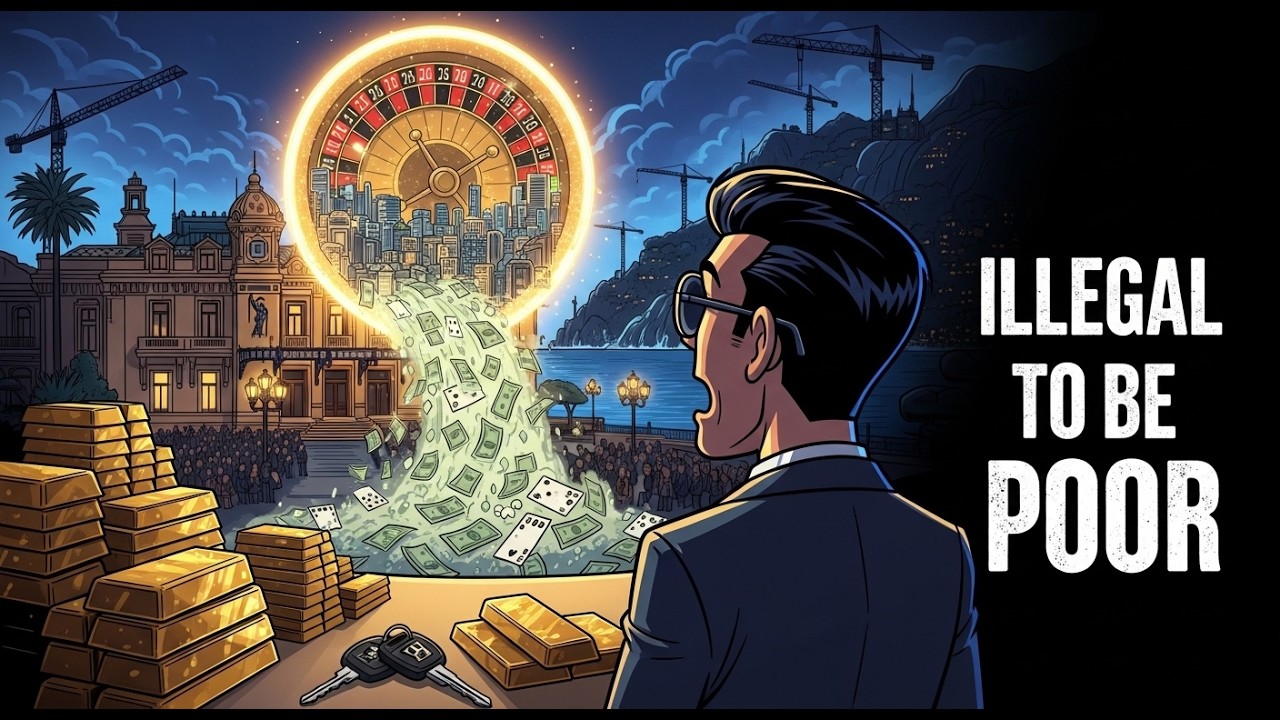


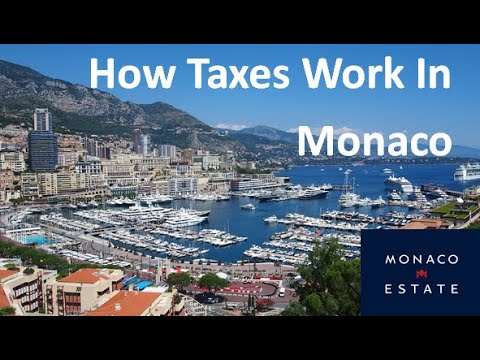
This article explores the unlikely history of Monaco's rise to wealth, driven not by natural resources or luck, but by strategic political decisions and economic ingenuity. It details how a bankrupt principality capitalized on gambling and fiscal sovereignty to become a playground for the ultra-rich.
Background: Monaco's Humble Origins
Monaco, a tiny country smaller than Central Park, is now renowned for its wealth, luxury, and lack of taxes. Today, one in three residents is a millionaire, and poverty is virtually nonexistent. However, this prosperity was not always a given. Around 170 years ago, Monaco was a struggling, dirt-poor region, primarily composed of lemon farmers on the brink of collapse.
Historically, Monaco's economy depended on taxing local farmers from the towns of Menon and Roccabruna, which made up most of the land and revenue. But in 1848, amidst widespread European revolutions, these towns rebelled against the heavy taxes and lack of public services, successfully seceding in 1861. Monaco was left with only a barren rocky landscape, no significant agriculture or industry, and a depleted treasury. It was essentially a bankrupt, resource-starved territory with no obvious path to prosperity.
The Reckless Gamble of Prince Charles III
Facing economic ruin, Prince Charles III of Monaco decided on a bold and seemingly reckless strategy: transform Monaco into a hub of vice and luxury to attract wealth. His insight was that if the country could not grow food or industry, it could grow wealth through vice, specifically gambling, which was illegal in neighboring France and Italy due to moral objections.
He saw an opportunity in the prohibition of gambling nearby and envisioned turning Monaco into a legal gambling paradise for the European aristocracy and wealthy elites. The initial attempts to establish a casino were clumsy—poor facilities, bad transportation, and inexperienced dealers. Recognizing the need for expertise, the prince brought in a skilled French mathematician and gambler, François Blanc, who had successfully managed a casino in Germany.
Building a Luxury Gambling Destination
François Blanc and his team rebranded the gambling operation, moving it to a rocky, previously neglected area called Lepelug and renaming it Monte Carlo. The new name conveyed luxury and prestige. Blanc invested his own capital to develop infrastructure—roads, hotels, steamship connections—creating a comprehensive experience designed for high-end clientele.
This was more than just a casino; it was a carefully crafted interface for wealth extraction. The facilities were designed to appeal to aristocrats and the wealthy, with an emphasis on exclusivity and glamour, rather than serving the local population. In fact, local residents were barred from entering the casino, ensuring that the flow of money remained from foreign elites into Monaco's coffers.
The Turning Point: Abolishing Income Tax
The most transformative move came in 1869. As the casino's profits soared from the gambling activities of Russian czars and European aristocrats, Monaco found itself awash with revenue. Instead of taxing its residents, Prince Charles III made a radical decision: abolish personal income tax for all residents.
This decision was counterintuitive at the time, as most of Europe was increasing taxes to fund wars and industrialization. Monaco's leadership effectively told the wealthy: 'You don't need to pay taxes here; your gambling losses fund our infrastructure.' This policy attracted affluent individuals from across Europe who sought to live in a tax-free environment, turning Monaco into a desirable residence for the rich.
Creating a Wealth Extraction Machine
The casino and its associated businesses, operated by the Société des Bains de Mer (SBM), became a vertically integrated monopoly on leisure and luxury. SBM controlled not only the casinos but also hotels, restaurants, and entertainment venues. This monopoly generated immense revenue, which funded Monaco’s public infrastructure for nearly a century.
An important aspect of this system was that the casino was essentially a private club for foreigners. Local residents were prohibited from gambling there, ensuring that money flowed into Monaco from wealthy outsiders without cannibalizing the local economy. This setup created a one-way valve for wealth, allowing Monaco to prosper while maintaining social and economic stability.
The Economics of Luxury and Monopoly
The success of Monaco’s wealth engine relied on a simple but powerful economic principle: attracting money from outside while preventing it from leaving. The casino's design and laws ensured that wealth came in from aristocrats, industrialists, and gamblers from abroad, but stayed within Monaco's ecosystem.
This model was highly effective because it prevented the typical regressivity of gambling—where local residents might lose their wages—by restricting local participation. Instead, Monaco’s system acted as a wealth conduit, with the local population benefiting from employment and infrastructure, while the actual money originated from external sources.
The Enduring Legacy and Modern Monaco
The strategic decisions made by Monaco’s rulers in the 19th century created a durable economic model. The casino, initially a gamble, became a cornerstone of Monaco’s wealth, funded by a steady stream of foreign money. Over time, Monaco evolved into a luxury hub for the world's elite, with an economy largely insulated from traditional resource dependencies.
Today, Monaco remains a tax haven and a playground for the rich, with policies rooted in the pioneering moves of Prince Charles III. Its success underscores how strategic policy decisions—focused on exclusivity, tax policies, and monopoly control—can transform a small, resource-scarce territory into a global center of wealth and luxury.
Monaco’s Strategic Wealth Creation
Monaco’s rise from a poor fortress to a millionaire’s paradise was not due to natural resources or luck, but rather a calculated and bold economic strategy. By leveraging gambling as a legal vice and implementing policies that attracted foreign wealth while discouraging local impoverishment, Monaco created a sustainable and lucrative model of wealth extraction.
This history demonstrates how understanding and manipulating economic incentives, legal frameworks, and social exclusivity can turn a small, struggling territory into one of the world's wealthiest and most desirable places to live. Monaco’s story is a testament to the power of strategic governance in shaping economic destiny.