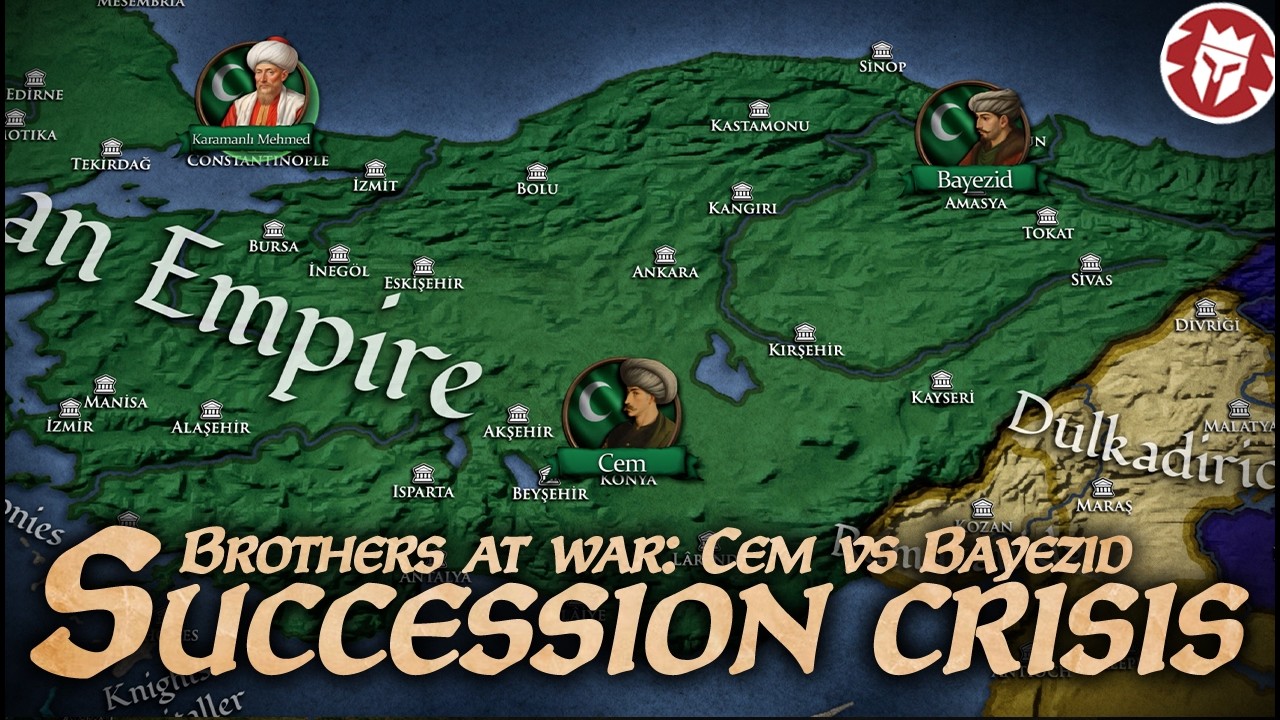
The complex succession crisis that followed the death of Memed II, focusing on the rivalry between his sons, Beaazit II and Jem Sultan. It examines how Ottoman traditions, familial dynamics, and political strategies shaped this turbulent period in the empire’s history.
The death of Memed II in 1481 marked a pivotal moment in Ottoman history, ending an era defined by relentless expansion and military conquest. Memed II, known as 'the Conqueror,' had waged extensive campaigns across Europe and the Middle East, securing the empire's borders and establishing its dominance. His 30-year reign was characterized by military victories that instilled fear in rivals and reinforced Ottoman power. However, his death introduced a period of internal instability, driven by succession disputes among his heirs.
The Ottoman Succession Tradition and Its Consequences
Ottoman succession was not based solely on primogeniture; instead, all royal princes had an equal claim to the throne. The selection depended heavily on divine will, the prince’s competence, and support from the military and court elites. Historically, the most capable or favored prince would often secure the throne, sometimes through military prowess or political alliances. This system, however, frequently led to intra-family conflicts, as multiple princes vied for power, sometimes engaging in fratricide to eliminate rivals. Such practices, while controversial, were seen as necessary to ensure stability and prevent civil war.
The Rise of Beazit II and Jem Sultan
Following Memed II’s death, two of his sons emerged as primary contenders: Beazit II and Jem Sultan. Beazit, born in 1447, was the eldest son and was known for his education, piety, and cautious approach to governance. His upbringing in Amasia, where he governed for over two decades, shaped him into a thoughtful and devout ruler, contrasting with his father’s aggressive expansionist style. Beazit’s governance emphasized stability and internal consolidation, which earned him the loyalty of key military and provincial elites.
Jem Sultan, born in 1459, was the youngest son of Memed II. Recognized early for his intellectual talents and charismatic personality, Jem was appointed to govern a troubled province in Anatolia, Ka, where he faced significant resistance from local Turk notables and rival factions. His experience in managing unrest and his support base distinguished him from Beazit, positioning him as a formidable contender for the throne.
Family Dynamics and Political Tensions
The relationship between Memed II and his sons was complex. Memed reportedly questioned Beazit’s suitability as successor, viewing him as overly religious and cautious, traits that contrasted with his own aggressive military style. Despite this, Beazit remained loyal, fighting alongside his father in key battles. Meanwhile, Jem's support base grew through his governance of contentious regions and his ability to rally local factions. The rivalry was further complicated by the practice of fratricide, which was institutionalized to prevent civil war but also sowed seeds of future conflict among the princes.
The Succession Crisis Unfolds
Upon Memed II’s death, the empire faced a critical choice. Beazit, with his reputation for stability and experience, was a natural candidate. However, Jem’s popularity among certain factions and his military experience made him a serious rival. The Ottoman court and military factions were divided, and external powers also played a role in influencing the outcome. This intra-family contest was not merely a personal rivalry but a struggle that threatened to destabilize the empire’s fragile political order.
Implications for the Ottoman Empire
The succession crisis of 1481 exemplifies the broader challenges faced by the Ottoman dynasty: balancing tradition with the realities of power, managing family rivalries, and maintaining stability amidst internal dissent. The conflict between Beazit II and Jem Sultan foreshadowed future succession struggles that would continue to shape Ottoman politics. The crisis also highlighted the importance of military support and court alliances in determining the outcome of succession disputes, influencing how future sultans would consolidate their power.
Legacy and Lessons from the Succession Crisis
The death of Memed II and the subsequent contest between Beazit II and Jem Sultan underscore the persistent instability inherent in Ottoman succession practices. While the empire’s system allowed for capable rulers to emerge, it also fostered internal rivalry that could threaten its cohesion. Understanding this period offers insight into the Ottoman approach to governance, succession, and family politics—an intricate balance of tradition, military strength, and familial ambition that would continue to influence the empire’s trajectory.