

A Mission Descends into Chaos as Flak and Enemy Fighters Strike
On the final day of 1944, Lieutenant Glenn Rojan piloted the Little Skipper through heavy anti-aircraft fire en route to Hamburg, aiming to destroy vital oil refineries. As explosions tore through the sky, Rojan witnessed multiple B-17s being shot down, including a dramatic collision between two aircraft that sliced one in half.
Despite the intense flak, Rojan saw a smoke target over the docks, signaling the crew to release their bombs. The bomb bay doors opened, and 500-pound bombs plunged toward the ground, hitting their target amid the chaos of ongoing attack. The formation then began its return, but German fighters soon emerged, complicating their escape.
The two planes crunch together and Cramps Tramps is sliced in two. Both planes fall from the air.
German Interceptors and Allied Fighters Transform the Battle
As the formation approached the coast of Hamburg, German fighters intensified their assault, with jets like the ME262 streaking past at high speed, firing cannons and pulling out of range before they could be hit. The German fighters targeted the weakened B-17s, with one, flown by Second Lieutenant Leo Ross, managing to descend despite damage and crew casualties.
American P-51 fighters appeared, forcing the German interceptors to retreat and allowing the surviving bombers to push on toward safety. The fight underscored the peril faced by the bomber crews, who battled both the enemy and treacherous turbulence.
The German interceptors have softer targets and immediately turn and run. The American P-51s, safe in the knowledge that the Germans have gone, depart to defend other B-17s further along the line.
Midair Collision and Crew’s Fight for Survival
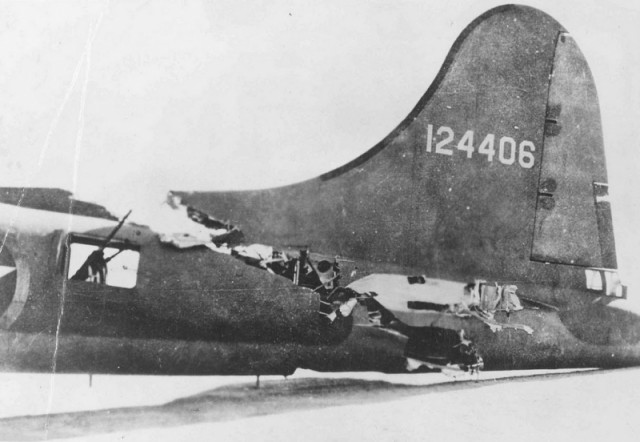
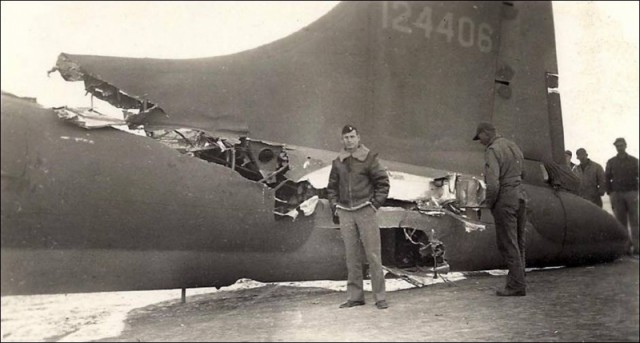
At approximately 12:44, Rojan’s plane, the Little Skipper, collided with the aircraft known as Nine Lives. The impact pierced the fuselage, causing the two planes to become locked together midair. Staff Sergeant Edward Wood Jr., in the turret of Nine Lives, was covered in metal shards from the crash but managed to crawl out using a hand crank after the turret was pushed down through the roof of the Little Skipper.
The impact left Russo, the turret gunner of the Little Skipper, trapped in a twisted metal mess with his turret embedded in Nine Lives. Russo recited his final prayers, audible through the intercom, as the crew grappled with their shattered aircraft. Meanwhile, Rojan and co-pilot William Lee struggled to maintain control, despite losing their front pilots and systems.
The two planes get closer and closer. They're about to collide. The pilots, McNab and Vaughn, are slumped in their seats, unaware that no one is alive up front.
The Crew’s Courage and the Perilous Descent
Following the collision, Rojan’s plane, still flying with damaged systems, experienced a violent shudder that threw him from the throttle controls. He and Lee assessed their situation, realizing the lead crew was no longer alive, and prepared for a difficult descent. Rojan’s attempt to keep the planes together was hampered by their locked-together status and the loss of control.
As Nine Lives crashed into the Little Skipper, the impact severely damaged both aircraft. Russo’s turret was crushed, and he feared for his life, crossing himself as he faced certain death. Despite the chaos, the crew in the Little Skipper remained in contact, listening to Russo’s fading prayers and the ongoing struggle to control their damaged aircraft.
The impact between the two planes is catastrophic, with Russo crossing himself through the plexiglass as he faces certain death. The crew can hear his fading Hail Marys, praying for salvation amid the wreckage.
Heroism Amidst the Wreckage and Uncertainty
Staff Sergeant Wood, trapped in the turret of Nine Lives, fought to escape through tangled wreckage, ultimately crawling out after the turret was pushed downward. Russo, still in his turret, was trapped and crossed himself as he faced a grim fate. The crew’s resilience and presence of mind highlighted the extraordinary courage displayed in the face of deadly destruction.
Meanwhile, Rojan’s aircraft, now locked with Nine Lives, was losing altitude but maintained enough control for the crew to attempt a controlled descent. The crew’s determination to survive, despite the overwhelming damage and loss of their front pilots, underscored the brutal reality of wartime aerial combat.
Russo recited his fading Hail Marys, praying for salvation as he faced the wreckage, embodying the grim resolve of those fighting for their lives amid the chaos.
Global Context: The Toll of the Battle and Broader War Dynamics
This harrowing incident reflects the broader risks faced by bomber crews during World War II, where the skies over Europe became battlegrounds of relentless violence. The collision exemplifies the chaos of combat, where technological advances like jet fighters and heavy anti-aircraft fire intensified the danger. Such incidents contributed to the high casualty rates and underscored the importance of air superiority.
The event also highlights the unpredictable nature of aerial warfare, where even well-executed missions could end in catastrophic failures, emphasizing the perilous environment faced by Allied forces during these critical operations.
The chaos and destruction of this encounter exemplify the brutal reality faced by bomber crews who operated under relentless threat from enemy fighters and anti-aircraft fire, shaping the strategic landscape of the war.
Looking Ahead: The Legacy of Courage in the Skies
As the surviving crew members navigated the treacherous return, their ordeal underscored both the peril and resilience of wartime pilots. The collision and subsequent fight for survival serve as stark reminders of the cost of air war and the heroism displayed under extreme conditions.
The incident prompts reflection on the continued evolution of aerial combat and the importance of technological and tactical advancements to reduce such tragedies in future conflicts. The bravery of those who fought and endured remains a poignant chapter in the history of aerial warfare.
Their experience underscores the enduring need for innovation and resilience in aerial combat, as the legacy of heroism continues to inspire modern military strategy.